
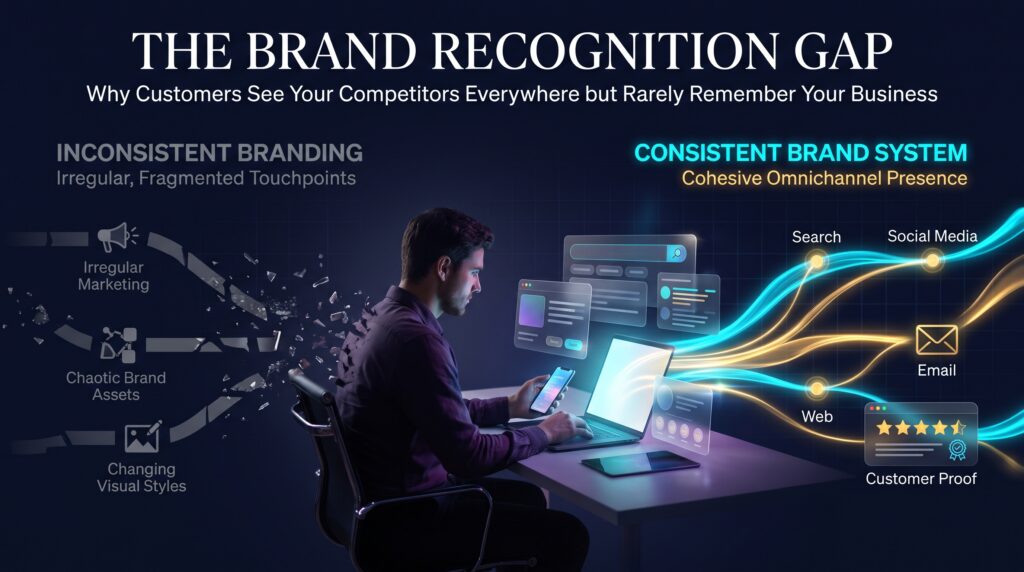


The brand consistency gap is the distance between how your business thinks it looks and how customers actually see it. Search for the company on Google and the logo is one shade of blue. Open the website and it is another. The Instagram profile uses a different font, the quote template looks like it came from a different decade, and the shopfront sign matches none of them. Customers rarely say “your branding is inconsistent”. They simply feel less sure about you. This guide explains what the brand consistency gap is, why it opens up in so many Australian businesses, what it costs, and how to close it with clear guidelines and practical graphic design courses.
What Is the Brand Consistency Gap?
The brand consistency gap is the mismatch between your intended brand identity and the way it shows up across real customer touchpoints. It covers the obvious things, such as logo, colours and fonts, and the less obvious ones, such as tone of voice, photo style, email signatures, invoice layout and the way your business name and address appear online.
Think of a well-known supermarket or bank. You can recognise it from across the street, or from a thumbnail on your phone, because every piece of communication follows the same rules. A small business does not need a national budget to achieve that. It needs decisions made once, written down and applied the same way everywhere.
When those decisions are missing, the brand consistency gap opens up quietly. Nobody plans it. It simply grows with every new flyer, post and webpage that is made in a hurry.
Where the Brand Consistency Gap Shows Up
Customers meet your business in more places than most owners realise. These are the touchpoints where the brand consistency gap usually appears first.
- Different headings, button styles and photo treatments from page to page, especially after several rounds of updates.
- Google Business Profile and directories. Old logos, outdated opening hours and variations of the business name or phone number.
- Social media. Profile pictures, cover images and post templates that change with whoever is posting that week.
- Email and invoices. Signatures, quotes and invoice layouts that do not match the website at all.
- Print and signage. Brochures, business cards, shopfront signs and vehicle wraps produced by different suppliers at different times.
- Ads and promotions. Google, Facebook and flyer campaigns built by separate people with no shared template.
- Proposals and presentations. Sales documents that look like they belong to a different company from the one on the website.
Each mismatch is small. Together they make a business look less established than it really is.
Why Australian Businesses Develop a Brand Consistency Gap
Almost nobody sets out to build an inconsistent brand. It happens for ordinary reasons.

1. Too many hands, no guidelines
A freelancer designs the logo, a cousin builds the website, an agency runs the ads and a staff member handles social posts. Without a shared guide, each person makes sensible choices that do not match anyone else’s.
2. Fast growth and quick fixes
When a business is busy, the next flyer is needed today, so someone opens a free template and changes the colours by eye. Multiply that by a few years and the result is dozens of near-matches.
3. Lost or unusable files
Logos saved only as low-resolution images, fonts nobody can find and artwork locked inside a former designer’s computer force staff to recreate things from scratch.
4. Multiple locations and franchises
Businesses with branches in Sydney, Melbourne, Brisbane or Perth often let each location adapt materials locally. Over time, the branches drift apart.
5. Staff turnover
New team members inherit whatever they find in the shared folder, and without clear rules they copy the most recent file, even if it was already wrong.
6. Platform limits
Each platform crops, compresses and sizes images differently. Without versions of your assets made for each channel, the same logo can look sharp in one place and blurry in another.
The Real Cost of the Brand Consistency Gap
A weak brand rarely produces a single dramatic loss. It slowly drains trust, time and money.
- Lower trust. Customers use visual consistency as a quick signal of reliability. Mismatched materials can make a perfectly good business seem less professional.
- Weaker recognition. People remember what they see repeatedly. If your look keeps changing, nothing sticks.
- Wasted ad spend. A Google or social ad that sends people to a page that looks nothing like the ad creates doubt at the exact moment you want a click to turn into an enquiry.
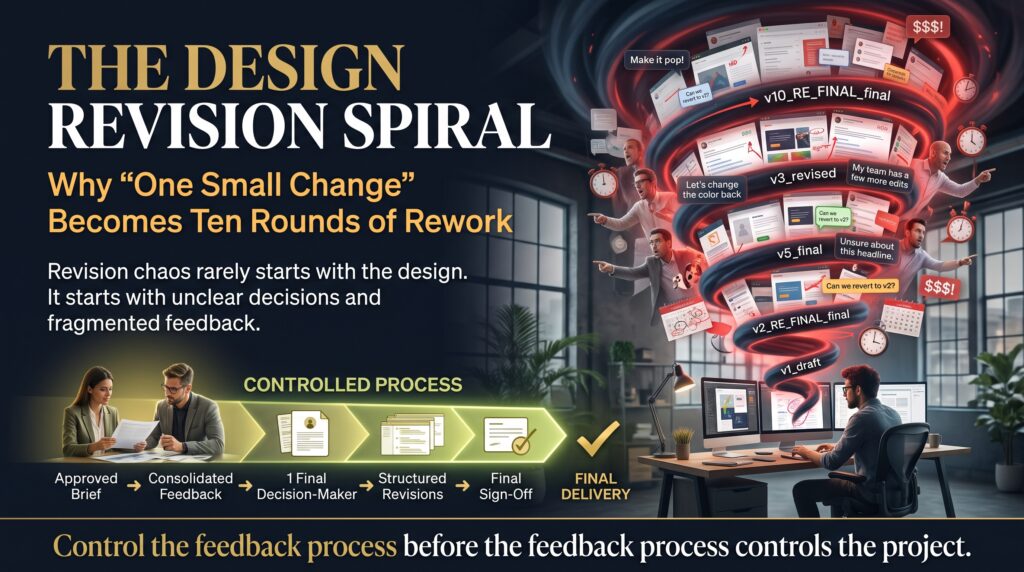
- Rework and delays. Staff spend hours searching for the right logo or rebuilding a template that already exists somewhere.
- Local search confusion. Inconsistent business names and contact details across the web can make it harder for search engines to trust your listings.
- Harder hiring and partnerships. Candidates, suppliers and partners judge your business by how it presents itself.
Closing the brand consistency gap is therefore not a cosmetic project. It supports sales, marketing efficiency and the credibility of everything else you do.
Warning Signs of the Brand Consistency Gap
Be honest about how many of these apply to your business. Several ticks mean the brand consistency gap is already costing you.
- You own more than one version of your logo and are not sure which is current.
- Your brand colours are described as “that blue” instead of an exact colour code.
- Nobody can say which fonts the business should use.
- Your website, social profiles and printed materials look like they belong to different businesses.
- New staff ask what to use and receive a different answer each time.
- You rely on one person, or one former supplier, to produce anything on-brand.
- Your business name, address or phone number appears in different formats online.
How to Close the Brand Consistency Gap: A Practical Plan
You do not need a full rebrand to fix this. Work through the steps below in order.
- Run a touchpoint audit. Collect everything customers see, including website pages, social profiles, ads, invoices, signage and packaging, and lay them side by side. The gaps will be obvious.
- Decide your core assets. Choose one primary logo, a simple alternative, a small colour palette, two or three fonts and a consistent photo or illustration style.
- Record exact specifications. Write down colours as HEX and RGB codes for screens and CMYK values for print, and note minimum logo sizes and clear space.
- Write simple brand guidelines. A short guide covering logo use, colours, typography, imagery and tone of voice is enough. A clear four-page guide beats a forty-page document nobody reads.
- Build master templates. Create ready-to-use files for social posts, flyers, quotes, proposals, email signatures and presentations, so staff change the words and not the design.
- Centralise your asset library. Store final logos, fonts and templates in one shared, organised folder with clear names and version control.
- Train the people who touch the brand. Anyone creating content should know how to use the templates and where to find the files.
- Review every quarter. Check new materials against the guide and refresh the library when something changes.
Most Australian small businesses can complete the first four steps within a few weeks, and the remaining steps then keep the gap from reopening.
Brand Consistency Gap and Local SEO
The brand consistency gap is not only a visual problem. It also affects how your business is found. Search engines and customers compare your business name, address and phone number across your website, directories and your Google Business Profile. When these details appear in several different forms, listings can become harder to match, and customers can end up on outdated pages.
Use one official version of your business name and contact details everywhere, and keep your logo and imagery the same on each platform. Google’s Search Central documentation explains how search works, and the Australian Government’s business.gov.au site offers general guidance for small business owners. If you also want to protect your logo or name, IP Australia provides information about trade marks.
Design Skills That Close the Brand Consistency Gap
Guidelines only work if someone can apply them. That is why many businesses train a staff member, or upskill themselves, in the Adobe tools used to produce on-brand material. The three programs below each solve a different part of the brand consistency gap, and all are taught as instructor-led, hands-on courses at beginner, intermediate and advanced levels. You can see them all on our courses page, and you can read more about the Adobe software itself on its official site.
Adobe Illustrator for logos and vector assets. Illustrator creates logos and icons that stay sharp at any size, from a business card to a vehicle wrap. Start with the Illustrator beginner course, build on it with the Illustrator intermediate course and finish with the Illustrator advanced course.
Adobe Photoshop for consistent imagery. Photoshop helps you edit and prepare photos so that colour, lighting and cropping feel the same across your website, ads and social media. Explore the Photoshop beginner course, the Photoshop intermediate course and the Photoshop advanced course.
Adobe InDesign for templates and multi-page documents. InDesign is ideal for brochures, catalogues, reports, proposals and branded templates that stay consistent across many pages. See the InDesign beginner course, the InDesign intermediate course and the InDesign advanced course.
Learners also practise typography, layout design, logo creation, print design and social media visuals, which are the exact skills that keep a brand consistent in the real world.
Brand Consistency Gap Across Australian Cities
The brand consistency gap looks slightly different from city to city, but it is solved the same way. Here is where we often see it, and where you can train.
Sydney. Agencies, hospitality and professional services operate in a visually crowded market, so standing out and staying consistent go hand in hand. See our graphic design courses in Sydney.
Melbourne. Strong creative culture means customers notice design quality, especially in retail, food and the arts. Explore our graphic design courses in Melbourne.
Brisbane. Growing trades, property and tourism businesses often outgrow their first logo and templates. View our graphic design courses in Brisbane.
Perth. Resources and service businesses with remote teams need shared templates so every site presents the same brand. Learn about our graphic design courses in Perth.
Adelaide. Family-owned and local businesses can build trust by showing the same polished look online and in print. Read about our graphic design courses in Adelaide.
Canberra. Government suppliers and consultancies need clean, credible documents and presentations. See our graphic design courses in Canberra.
Prefer to learn from home or train your whole team at once? Training is also available live virtually and in-house. Browse every option on our locations page.
Brand Consistency Gap: Frequently Asked Questions
What is the brand consistency gap?
It is the difference between your intended brand and the way it actually appears across your website, social media, print and other customer touchpoints. The wider the gap, the less recognisable and trustworthy your business can seem.
How do I make my brand consistent across all platforms?
Audit every touchpoint, choose one logo, colour palette and set of fonts, write short brand guidelines, build templates and keep all files in one shared library. Then review everything regularly.
Do small businesses really need brand guidelines?
Yes. A short, practical guide saves time, reduces mistakes and helps freelancers, agencies and staff produce material that matches. It does not need to be long to be useful.
Which Adobe software helps keep branding consistent?
Illustrator is best for logos and vector artwork, Photoshop for photo editing and image consistency, and InDesign for templates and multi-page documents such as brochures and proposals.
Can I learn graphic design without experience?
Yes. Beginner courses assume no prior experience and teach the tools step by step, so owners, marketers and staff can learn to produce on-brand material themselves.
Close the Gap Before Customers Notice It
The brand consistency gap does not usually come from bad design. It comes from good people making quick decisions without a shared system. Fix the system with clear guidelines, ready-made templates and someone who knows how to use the tools, and your business will start to look as capable as it really is.
If you are ready to close the brand consistency gap, review our graphic design courses, read the FAQs or contact our team to choose the right level for you or your staff.