


Graphic design courses are the thing many creative people promise themselves next year, and then next year again. Nothing dramatic happens while you wait. Your job still pays, your clients still reply and the software still opens. That is exactly why the delay is so expensive: comfort never sends an invoice, yet it bills you every single month.
This article looks at the hidden price of being comfortable in terms of hours, opportunities and confidence rather than scary statistics. You will see what staying the same is really costing you, how to tell when you have outgrown your current skill set, and how instructor-led training in Photoshop, InDesign and Illustrator can change the picture. Whether you live in Sydney, Perth or somewhere in between, there is a practical next step waiting at the end.
Why Graphic Design Courses Feel Optional Until They Are Not
Comfort is not laziness. It is a perfectly sensible response to a life that already has enough going on. You know your tools, your regular clients and your shortcuts. Moving beyond them means feeling clumsy again, and nobody enjoys that.
The trouble is that the design world keeps moving whether you do or not. Software gains new features, clients expect files built for social, print and web at once, and the people competing for your work are often the ones who made time to learn. Graphic design courses feel optional right up to the moment a brief lands that you cannot confidently take on. By then you are learning under pressure instead of by choice.
You can see how the profession is tracking on the Jobs and Skills Australia graphic designers profile, which publishes occupation data for the field. The point is not to panic over numbers. It is to notice that design remains a real, evolving occupation, and evolving occupations reward people who evolve with them.
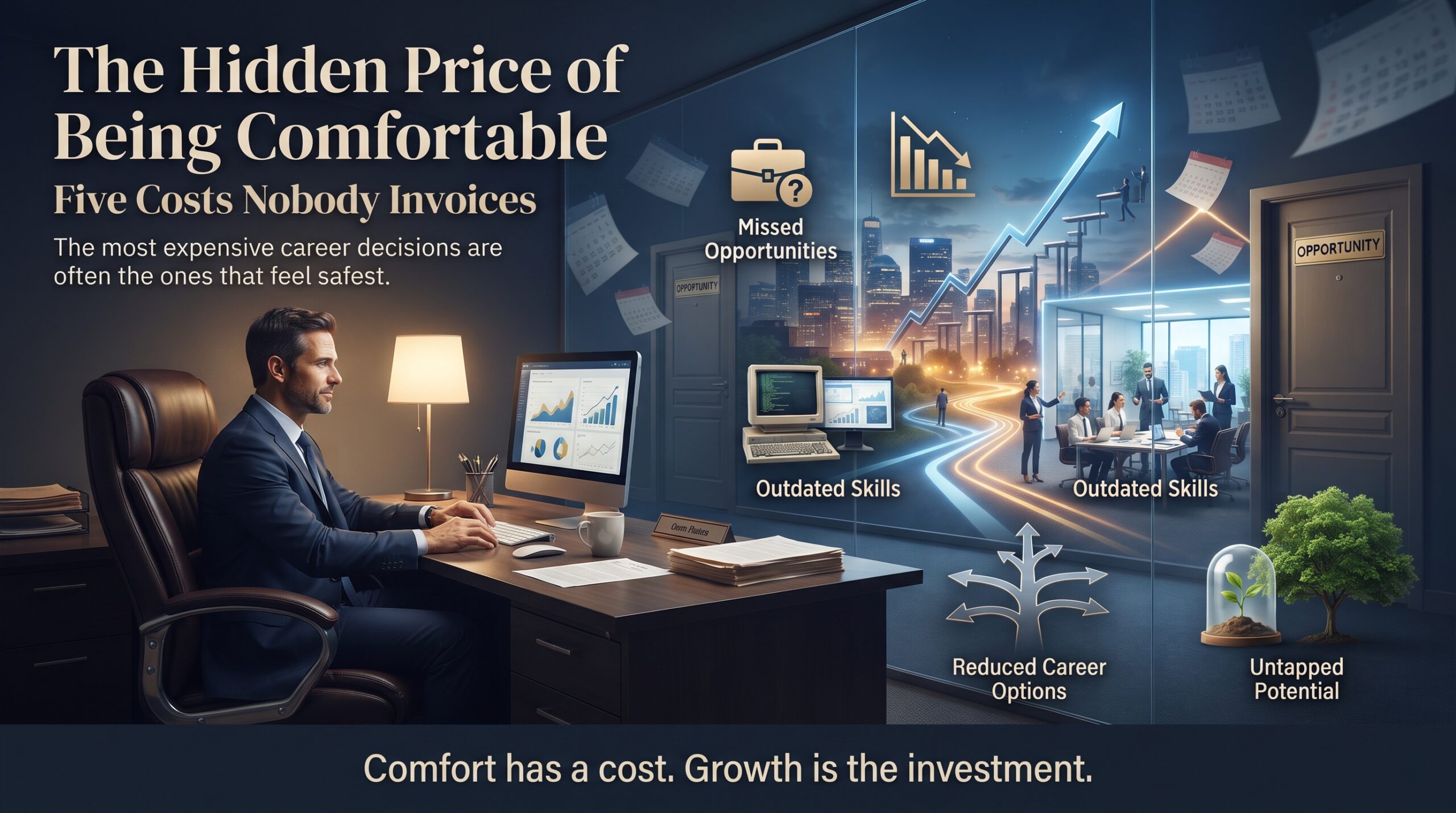
The Hidden Price of Being Comfortable: Five Costs Nobody Invoices
1. The rate you never get to raise
Designers who rely on one familiar set of skills often find their pricing stuck too. If you offer the same logo and flyer package you did three years ago, clients treat it as a commodity. Specialist skills such as advanced vector work, multi-page layout systems and high-end retouching give you a reason to charge more. Graphic design courses at an advanced level are one of the quickest ways to earn that reason.
2. The projects you quietly say no to
Every time you turn down a catalogue, a brand guideline or a long report because it feels out of reach, that is income walking out the door. Nobody tallies those refusals, but across a year they add up to a lot of work that went to someone else.
3. Skills that age while you stand still
Software does not sit still. Adobe keeps adding features, including AI-assisted tools in apps like Adobe Photoshop and Adobe Illustrator, that change how everyday tasks get done. A workflow that felt sharp a few years ago can now take twice as long as it needs to. The cost shows up as late nights and thin margins.
4. A portfolio that has quietly become a museum
Open your portfolio and check the dates. If your best work is old, prospective clients and employers will assume your current level matches your last good project. Structured graphic design courses hand you fresh briefs, honest feedback and finished pieces that bring your showcase up to date.
5. Confidence that slowly drains away
This is the hardest cost to measure and the most important. When you avoid learning, you begin to doubt what you can handle. Small wins from practical, hands-on training rebuild that confidence faster than any motivational quote.
Seven Signs You Have Outgrown Your Comfort Zone
- You use the same three tools and techniques on almost every job.
- You search for the same how-to answers repeatedly instead of simply knowing them.
- Clients ask for formats or layouts you are not sure how to deliver.
- Your portfolio has not changed in more than a year.
- You feel a twinge of envy when you see other designers’ work.
- You want to move into branding, print production or digital design but are unsure where to start.
- You have been meaning to enrol in a course for months.
Ticked three or more? Then your comfort is costing you something real. The good news is that one well-chosen course can close the gap faster than you expect.
What Graphic Design Courses Actually Cover
Our graphic design courses are instructor-led and hands-on, built around the three Adobe programs that most studios and marketing teams rely on. Each program is taught at beginner, intermediate and advanced levels, so you start where you are rather than where a syllabus assumes you are. You can compare every option on the courses page.
- Photoshop: photo editing, retouching, image manipulation and digital graphics. Start with the Photoshop beginner course, then move up to the intermediate and advanced
- InDesign: layout design, typography, brochures, catalogues and multi-page documents. Choose the InDesign beginner course, the intermediate level or the advanced level.
- Illustrator: logos, icons, vector graphics and illustration. Explore the Illustrator beginner course, the intermediate level or the advanced level.
Which Level of Graphic Design Courses Is Right for You?
- Beginner: you are new to the software, changing careers, or running a small business and want to stop relying on templates.
- Intermediate: you can get by in the programs, but your work takes too long or looks inconsistent from project to project.
- Advanced: you already design professionally and want speed, complex techniques and the polish that wins higher-value jobs.
Not sure where you fit? Describe what you currently make on our contact page and the team will point you to the right level. A short conversation usually settles it.
Graphic Design Courses Across Australian Cities
Training is available in major cities and live online, so geography is no longer a good excuse. Pick the option that suits your city and your creative scene.
- Sydney graphic design training: ideal if your work leans towards agencies, advertising and corporate branding. Our Sydney office is in Surry Hills.
- Melbourne graphic design training: home to a strong creative, publishing and print community, with our office in West Melbourne.
- Brisbane graphic design training: a good fit for the city’s growing marketing, tourism and events work, with our office on Ann Street.
- Adelaide graphic design training: suits freelancers and small businesses who want practical skills they can use the next day.
- Canberra graphic design training: useful for communications, publications and layout work where clarity and accessibility matter.
- Perth graphic design training: built for designers who serve clients across Western Australia and beyond.
Based in Hobart or elsewhere? Live online and in-house options are available too. See the full locations page for details.
Career Paths After Graphic Design Courses
Training is only worth the effort if it points somewhere. These are the roles learners typically aim for after finishing their course:
- Junior graphic designer: visual designs for branding, marketing, print, websites and social media.
- Digital designer: graphics for websites, online campaigns, ads and social platforms.
- Graphic design production assistant: artwork preparation, layouts and final production support.
- Visual designer: engaging visuals for brands, digital products, presentations and marketing content.
- Freelance graphic designer: logos, brochures, posters and branding for your own clients.
- Marketing design assistant: flyers, email graphics, digital ads and campaign visuals.
None of these paths ask you to leave your comfort zone forever. They simply ask you to leave it long enough to learn something new.
How to Fit Graphic Design Courses Around a Busy Life
Time is the most common objection, and it is a fair one. Preferred timings include full-time weekdays, part-time weeknights and part-time weekends, so you can learn around a job, a family or freelance deadlines. A few habits make the process easier:
- Block learning hours in your calendar the way you would block a client meeting.
- Pick one real project of your own to improve during the course, so every lesson pays off straight away.
- Tell one person about your goal. Accountability beats willpower.
- Practise for ten minutes a day between sessions rather than cramming on weekends.
Pair Your Design Skills With Marketing and Web Knowledge
Design rarely lives alone. The designers who grow fastest understand where their work ends up: websites, ads, emails and social feeds. A digital marketing course shows you how to measure whether your designs actually perform, while the web development job program explains how visuals become live pages. Combined with graphic design courses, they turn you from someone who makes assets into someone who solves business problems.
Common Excuses That Keep People Comfortable
- “I am not creative enough.” Design is a learnable craft built on technique and practice, not a talent you either have or lack.
- “I will start when work slows down.” It rarely does. Part-time and evening options exist for exactly this reason.
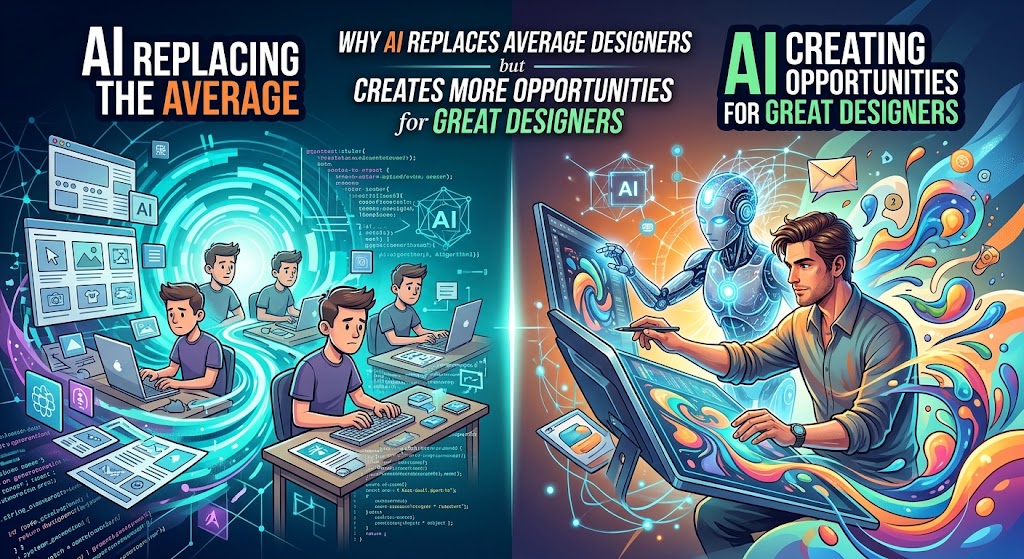
- “AI will do it all anyway.” AI tools are now part of the design workflow, which is why trained designers who can direct them well stand out.
- “It is too late for me.” Learners come from every age and background, from students to experienced marketers.
- “I cannot afford it.” Count the cost of staying the same first, then ask our team about your options.
Graphic Design Courses FAQs
Do I need design experience before starting graphic design courses?
No. The beginner-level courses are designed for people who are new to Photoshop, InDesign or Illustrator, so you can start from the basics and build up.
Which software do graphic design courses cover?
The courses focus on Adobe Photoshop, InDesign and Illustrator, each offered at beginner, intermediate and advanced levels.
Can I study graphic design courses online?
Yes. You can attend in person in major cities or join live virtually, which suits regional learners and busy schedules.
What jobs can graphic design courses lead to?
Common targets include junior graphic designer, digital designer, visual designer, production assistant, marketing design assistant and freelance designer. Results depend on your portfolio, effort and experience.
Are graphic design courses worth it if I already work as a designer?
They can be, especially if you want faster workflows, higher rates or a new specialty. The intermediate and advanced levels are built for working designers. More answers are in our FAQs.
Where can I find graphic design courses near me?
We teach in Adelaide, Brisbane, Canberra, Melbourne, Perth and Sydney, plus live online. Check the locations page to choose your closest option.
Stop Paying the Hidden Price
Comfort feels free, but it is often the most expensive item in your calendar. The price shows up as lower rates, smaller projects, an ageing portfolio and a quiet loss of confidence. The fix is rarely dramatic. It is one decision, one enrolment and one new skill at a time. Graphic design courses will not do the work for you, but they give you the structure, feedback and momentum to start.
Ready to stop paying? Browse the full course list, contact our team or call 1300 649 299 and we will help you choose the right level and location. You can also read more about us or browse our blog.