
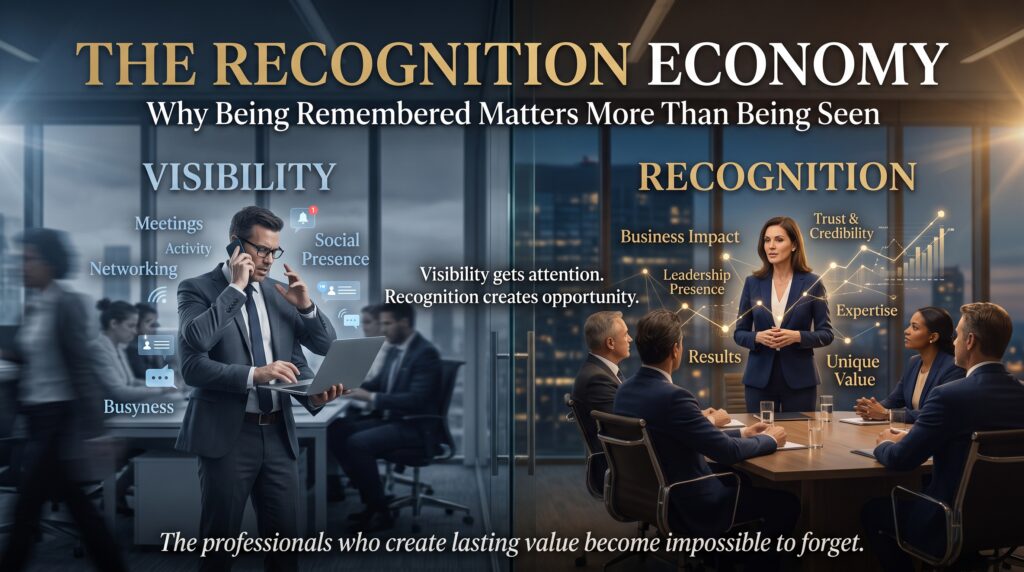


The recognition economy is a simple idea with big consequences: attention is cheap, but memory is valuable. Anyone can get a thousand views on a post. Very few people or brands are still remembered a week later, and those are the ones who win the sale, the referral and the repeat customer.
This guide explains how the recognition economy works, why visibility alone no longer pays, and which design choices make a business, freelancer or personal brand unforgettable. You will also find a practical six-step plan and the Adobe skills worth learning first, with training options in Sydney, Melbourne, Brisbane, Perth, Adelaide and Canberra.
What Is the Recognition Economy?
In the recognition economy, value flows to whoever people can recall quickly and trust instantly. Feeds, search results and inboxes are crowded, so audiences scroll past almost everything. What they keep is a shape, a colour, a voice or a feeling attached to a name.
Psychologists describe a related effect called mere exposure: we tend to prefer things we have encountered before. But exposure only works when the thing is consistent enough to be recognised. A brand that looks different every time it appears is seen often yet never remembered. That gap between being seen and being remembered is where the recognition economy lives.
Being Seen vs Being Remembered: Why the Difference Matters
Being seen is a metric. Being remembered is an outcome. Impressions, reach and views tell you how many eyes passed over your work. Recall tells you how many minds kept it.
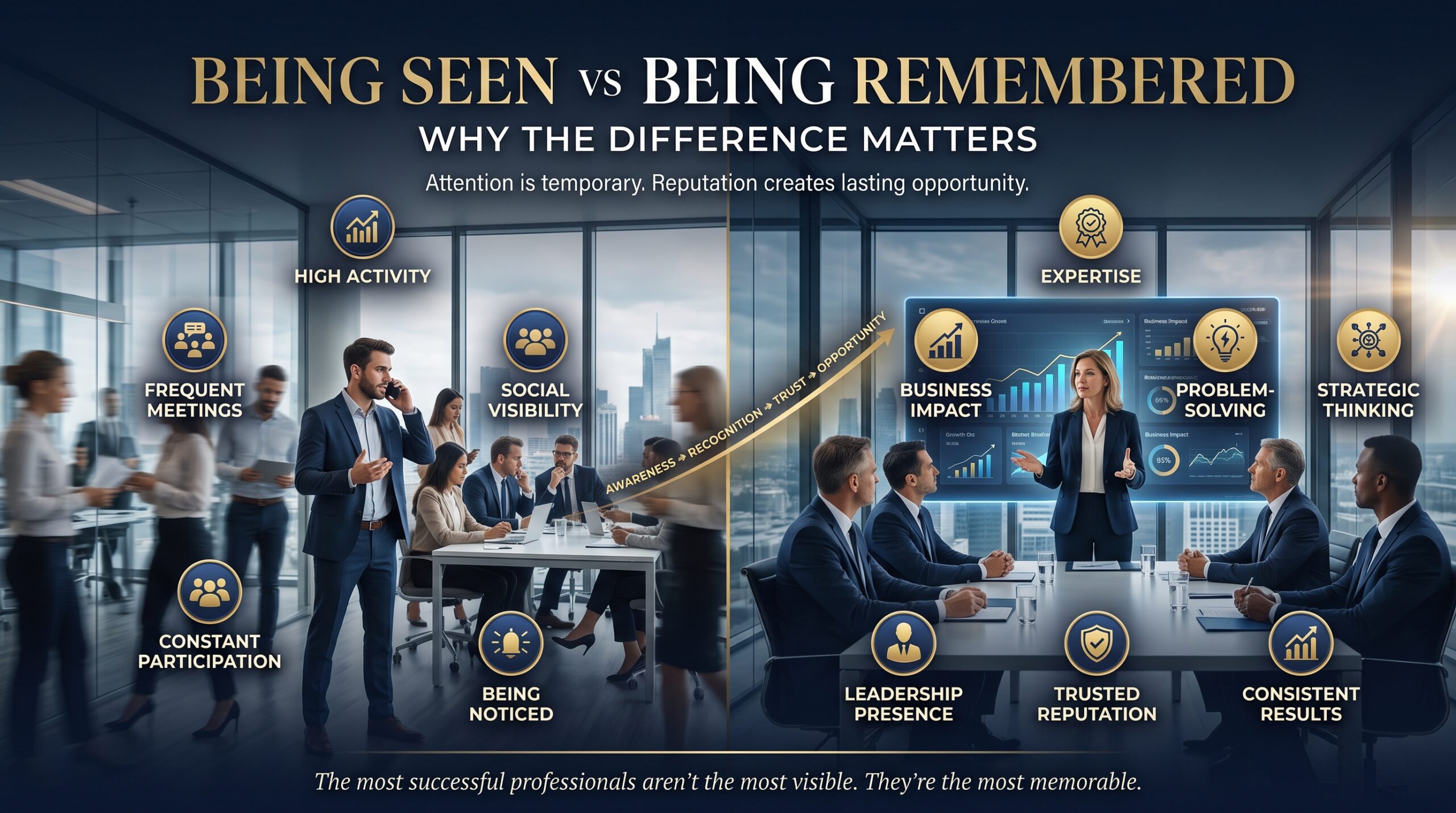
| Being seen | Being remembered | |
| What it measures | Impressions and reach | Recall and recognition |
| How long it lasts | Seconds | Weeks, months or years |
| What it builds | Traffic | Trust and preference |
| Typical cost | Paid again every time | Compounds with consistency |
| Design role | Grab attention | Create a consistent identity |
Paid ads can buy visibility on demand. Memory cannot be bought in one campaign. It is built through repeated, consistent signals, and design is the most reliable carrier of those signals.
Why the Recognition Economy Matters for Small Businesses and Freelancers
Large companies can afford to repeat themselves across billboards and television. Small businesses and freelancers cannot, so every touchpoint has to do double duty. A well-designed identity lets a tiny budget punch above its weight.
- Faster trust. A polished, consistent look signals reliability before anyone reads a word.
- More referrals. People recommend what they can describe and recall, such as “the cafe with the green stripe logo”.
- Higher prices. Recognised brands face fewer price comparisons than anonymous ones.
- Easier marketing. When your identity is clear, flyers, posts, packaging and websites all reinforce each other.
The Design Elements That Win in the Recognition Economy
Memorability is not luck. It comes from a small set of visual decisions made carefully and repeated everywhere.
A Simple, Distinctive Logo
The most remembered logos are simple enough to sketch from memory. They use clean shapes, work in one colour and stay legible when small. Vector tools are the standard for this job, and the Illustrator Beginner Course teaches the logo and shape skills behind scalable marks.
A Signature Colour Palette
Colour is often the first thing people recall. Choose one dominant colour and one or two supporting tones, then use them everywhere. Consistency matters more than the specific shade.
Typography With Personality
Typefaces carry tone. A confident headline font paired with a quiet reading font gives your brand a voice even without a logo. Limit yourself to two families and apply them the same way each time.
Layout and Consistency
Brochures, catalogues, menus and reports should feel like they came from the same hand. Grids, margins and repeating elements create that familiarity. The InDesign Beginner Course covers layout fundamentals for multi-page and print-ready work.
Distinctive Imagery
Photography style, editing treatment and graphic textures all become part of your signature. Learning to retouch and composite images lets you keep that look consistent, and the Photoshop Beginner Course is a practical starting point.
How to Build Recognition in 6 Steps
- Define what you want to be remembered for. Write one sentence describing your promise and your personality.
- Audit what you show today. Gather every logo, post, flyer and web page. Mark where colours, fonts and tone drift apart.
- Build a small identity kit. Settle your logo versions, palette, fonts and image style in a one-page guide.
- Apply it everywhere. Use the same kit across your website, social media, signage, packaging and documents.
- Repeat before you reinvent. Resist changing the look when you feel bored. Your audience is only just starting to notice it.
- Protect it. Once your name and logo carry value, look into registering them. IP Australia explains how trade marks work.
Common Mistakes That Hurt Brand Recall
- Chasing every trend. A new style each month means nothing sticks.
- Too many fonts and colours. Variety feels creative but reads as unfocused.
- Complex logos. If it cannot be recognised at thumbnail size, it will not be remembered.
- Confusing activity with impact. Posting daily without a clear identity only makes you seen.
- Ignoring usability. Research groups such as Nielsen Norman Group regularly show that clarity and consistency make designs easier to recall and use.
Learn the Skills Behind the Recognition Economy
You do not need a design degree to build a memorable identity. Three Adobe tools cover most of the work, and each is taught at beginner, intermediate and advanced level:
- Illustrator for logos, icons and vector artwork: beginner, intermediate and advanced.
- Photoshop for photo editing and image manipulation: beginner, intermediate and advanced.
- InDesign for layouts, brochures and catalogues: beginner, intermediate and advanced.
Instructor-led training is available in major cities, as well as live virtually:
- Graphic design courses in Sydney
- Graphic design courses in Melbourne
- Graphic design courses in Brisbane
- Graphic design courses in Perth
- Graphic design courses in Adelaide
- Graphic design courses in Canberra
You can compare every level on the graphic design courses page or check the official tools on the Adobe Australia site.
Recognition Economy FAQs
What does recognition economy mean?
It describes a market where memorability earns more than raw visibility. Brands and creators that people can instantly recognise and recall attract trust, referrals and repeat business, while those that are only seen briefly are quickly forgotten.
How does design help in the recognition economy?
Design turns a name into something people can picture. A distinctive logo, colour palette, typography and layout system create a consistent identity that audiences learn to recognise at a glance.
How long does it take to build brand recognition?
There is no fixed timeline, but recognition grows through repetition. Expect months of consistent use across several channels before your identity becomes familiar to your audience.
Which graphic design course should I start with?
Start with the tool that matches your goal. Illustrator suits logos and icons, InDesign suits layouts and print, and Photoshop suits image editing. All three have beginner courses, and the team can advise you through the contact page.
Can I learn graphic design without experience?
Yes. The beginner courses assume no prior design knowledge and build up through practical, hands-on exercises.
Final Thoughts: Choose Memory Over Noise
The recognition economy rewards patience and consistency. Being seen is easy and fleeting. Being remembered takes a clear identity, applied with discipline, until people can recognise you without reading your name.
If you want to build that identity yourself, explore the Graphic Design Courses in Australia, read more on the blog, or call 1300 649 299 to find the right level for you.