

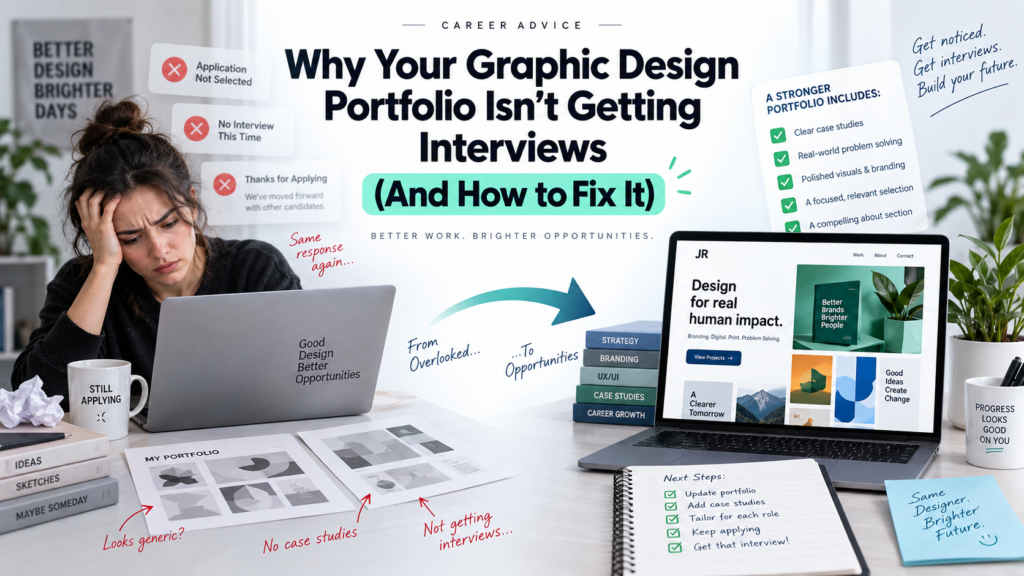
Your Graphic Design Portfolio has more design skill in it than the recruiter will ever notice because most portfolios get judged before anyone truly looks. Hiring managers reviewing candidates in Melbourne, Sydney, Brisbane, Perth, Adelaide and Canberra typically decide whether to keep scrolling within the first 10 to 30 seconds. If your portfolio hasn’t communicated who you are and what you can do by then, the talent inside it never gets a chance to matter.
The good news: this is almost never a talent problem. It’s a presentation problem, and it’s fixable.
The 30-Second Problem
Recruiters reviewing dozens or hundreds of applications don’t read portfolios they scan them. Research on design hiring consistently finds that reviewers form an initial impression within seconds and only dig deeper if that first screen tells them clearly what kind of designer they’re looking at.
That means a technically excellent Graphic Design Portfolio can still get skipped if it doesn’t compress that information fast enough for a busy reviewer to act on it.
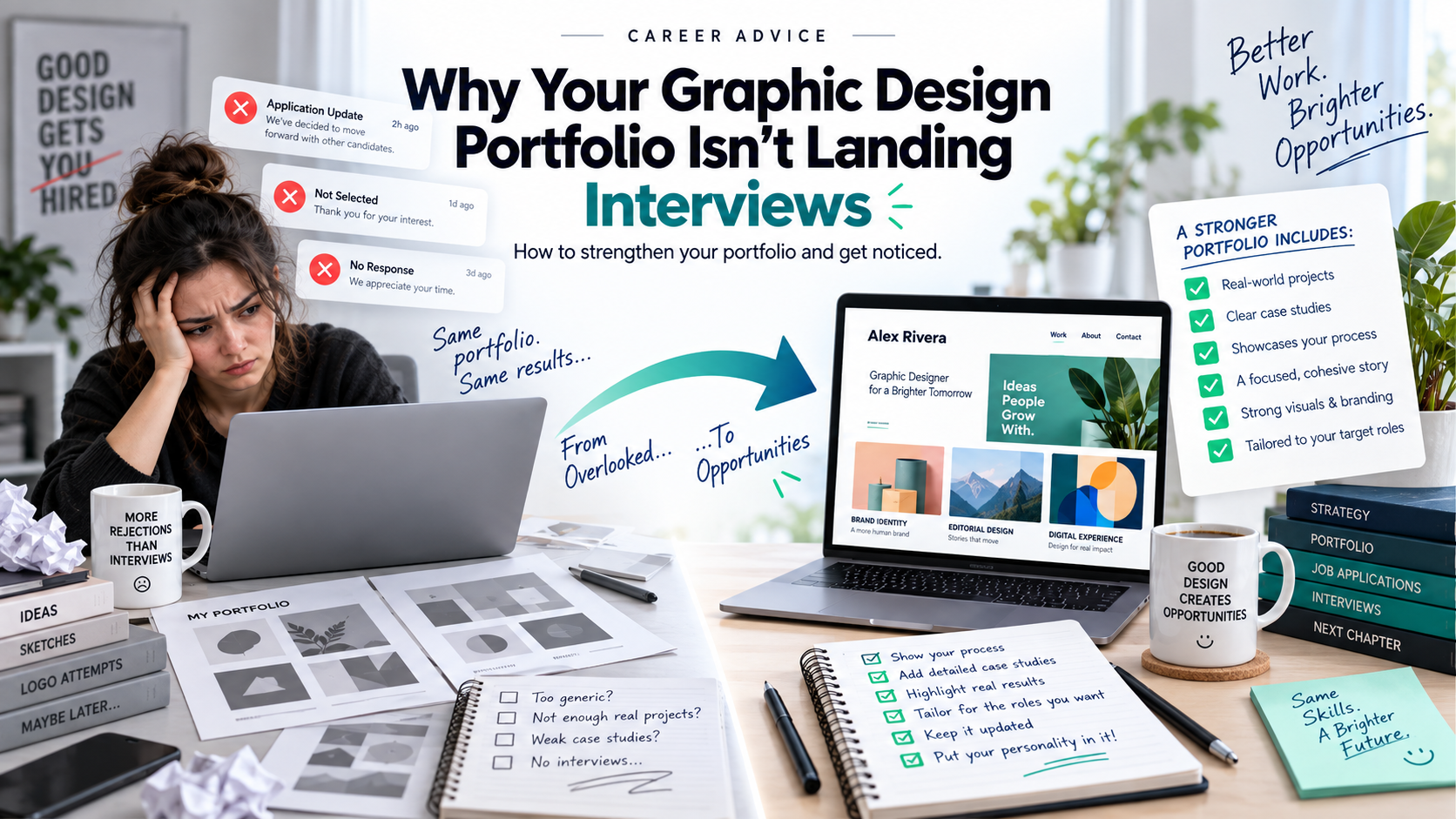
Why Your Graphic Design Portfolio Isn’t Landing Interviews

1. It’s a Gallery, Not a Story
Posting finished logos and posters with no context tells a recruiter what you made, not how you think. Employers want to see the brief, the audience, the concepts you explored, and why you landed on the final design the thinking is what actually gets remembered.
2. Too Much Tutorial Work, Not Enough Original Thinking
Course exercises and tutorial-based projects are great for building skill, but a portfolio full of them signals practice rather than capability. Recruiters are looking for evidence you can solve a real brief, not follow a set of steps.
3. No Clear Specialty or Role Fit
A portfolio that tries to show everything — branding, social graphics, print, packaging, illustration often ends up telling a reviewer nothing about what you’re actually best at. A focused portfolio built around a clear direction reads faster and lands harder.
4. Weak Presentation of Strong Work
Inconsistent layouts, low-resolution exports, and cluttered case studies undercut genuinely good design. Presentation is part of the craft a Graphic Design Portfolio is itself a design project, and it’s judged as one.
5. It Doesn’t Speak the Client’s Language
Employers in corporate and agency settings evaluate work against business outcomes: does this design improve engagement, support a brand, or move a customer toward a decision? A portfolio that only talks about aesthetics misses the language hiring managers are actually listening for.
What Recruiters Scan For in the First 10 Seconds
| Signal | Weak Portfolio | Strong Portfolio |
| First impression | Unclear what kind of designer you are | Clear specialty stated up front |
| Project selection | 10–20 mixed, low-context pieces | 6–10 focused, well-explained projects |
| Storytelling | Final designs only | Brief, process, decisions, outcome |
| Relevance | Generic tutorial-style work | Work tailored to the target role |
| Presentation | Inconsistent, cluttered layout | Clean, consistent, fast to scan |
How to Fix Your Graphic Design Portfolio
Cut It Down to Your Best 6–10 Projects
Quality beats quantity every time. Choose the projects that best demonstrate range, decision-making and finished polish, and be ruthless about removing anything that doesn’t earn its place.
Add Process, Not Just Polish
For each project, briefly walk through the brief, your research, two or three concepts you considered, and why the final direction won. This single change is what turns a gallery into a case study.
Tailor It to the Role You Want
If you’re chasing branding work, lead with branding. If it’s social and digital, lead with that. A Graphic Design Portfolio built for a specific direction reads faster and signals seniority, even with fewer pieces.
Rebuild Your Skills Where It’s Weakest
If your portfolio is thin because your technical skills haven’t caught up yet, that’s a fixable gap. Structured, instructor-led training in Photoshop, InDesign and Illustrator gives you real projects to add not just tutorial exercises and the technical confidence to talk through your decisions in an interview.
Build the Skills Behind a Stronger Portfolio: Courses Across Australia
Whether you’re based in Melbourne, Sydney, Brisbane, Perth, Adelaide or Canberra, a stronger Graphic Design Portfolio starts with stronger fundamentals. Our Graphic Design Courses cover Photoshop, InDesign and Illustrator across beginner, intermediate and advanced levels, so every project you add to your portfolio is built on real, job-ready skill.
For more career tips, browse our Blog, check our FAQs, or contact our team to find the right course for the portfolio and career you’re building.
Final Thoughts
A Graphic Design Portfolio that isn’t landing interviews usually isn’t missing talent it’s missing story, focus and presentation. Fix those three things, back them with real skills, and the same work that was getting skipped in ten seconds starts earning a second look.
Ready to build the skills behind a portfolio that gets noticed? Explore our Graphic Design Courses and start creating work employers actually stop scrolling for.