



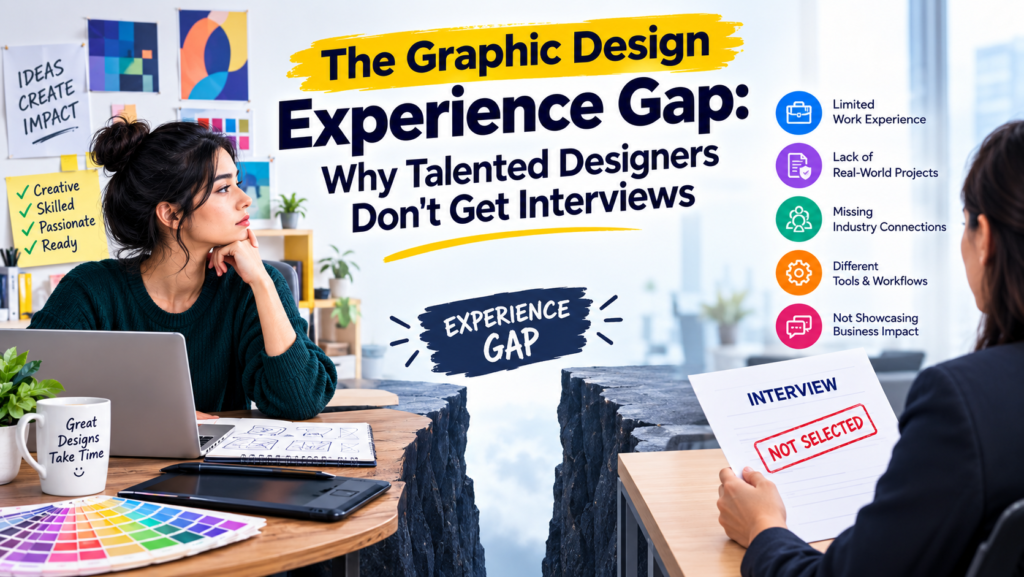
The graphic design experience gap is one of the most frustrating catch-22s in the creative job market. Every junior role seems to want two or three years of experience, but nobody explains how you’re supposed to get that experience if nobody will hire you without it. Talented, genuinely capable designers send out dozens of applications and hear nothing back, not because their eye for design is weak, but because something structural is standing between their skill and the interview.
This is the graphic design experience gap in its purest form: a mismatch between what a designer can actually do and what a hiring process can actually see. The good news is that once you understand where the gap comes from, it’s very fixable, often faster than people expect.
What Is the Graphic Design Experience Gap, Really?
The graphic design experience gap isn’t really about a lack of talent. It’s the space between having design ability and being able to prove it in a format employers can quickly evaluate: a scannable resume, a focused portfolio, and case studies that show real problem-solving, not just pretty finished pieces. Designers who close this gap fastest are rarely the most naturally talented in the room. They’re the ones who packaged their skills in a way a hiring manager could recognise in under sixty seconds.
Why the Graphic Design Experience Gap Keeps Talented Designers Out
Several structural issues compound the graphic design experience gap at once. Here are the five that come up most often.
1. The Portfolio-First Catch (No Portfolio, No Interview)
Design is judged visually before it’s judged on paper, so a thin or generic portfolio closes doors instantly, regardless of how strong the resume looks. This is one of the clearest drivers of the graphic design experience gap: no visible proof, no interview, no matter how capable you actually are.
2. ATS Systems Can’t Read Design-Heavy Resumes
Most applicant tracking systems parse plain text, not layout. A beautifully typeset resume exported as a flattened PDF from Illustrator can look like a blank page to the very software that decides whether a human ever sees it. Ironically, showing off design skill on your resume can be exactly what widens the graphic design experience gap at the very first screening step.
3. “Junior” Roles That Ask for 2–3 Years of Experience
Job ads labelled entry-level frequently list experience requirements that entry-level candidates can’t yet have. This mismatch is baked into how many junior design roles are written, and it’s one of the most commonly cited frustrations behind the graphic design experience gap.
4. A Crowded, Slow-Growing Job Market
Overall demand for graphic designers is growing slowly compared to many other fields, which means openings are largely driven by replacement rather than fast expansion. That keeps competition high for every entry and mid-level role, widening the graphic design experience gap for anyone without a way to stand out quickly.
5. Weak Case Studies Instead of Real Problem-Solving Proof
A portfolio of finished visuals alone doesn’t show how a designer thinks. Hiring managers increasingly want to see the process, sketches, iterations, the problem being solved, not just the final polished output. Without that narrative, even excellent work can fail to prove real capability.
How to Fix the Graphic Design Experience Gap
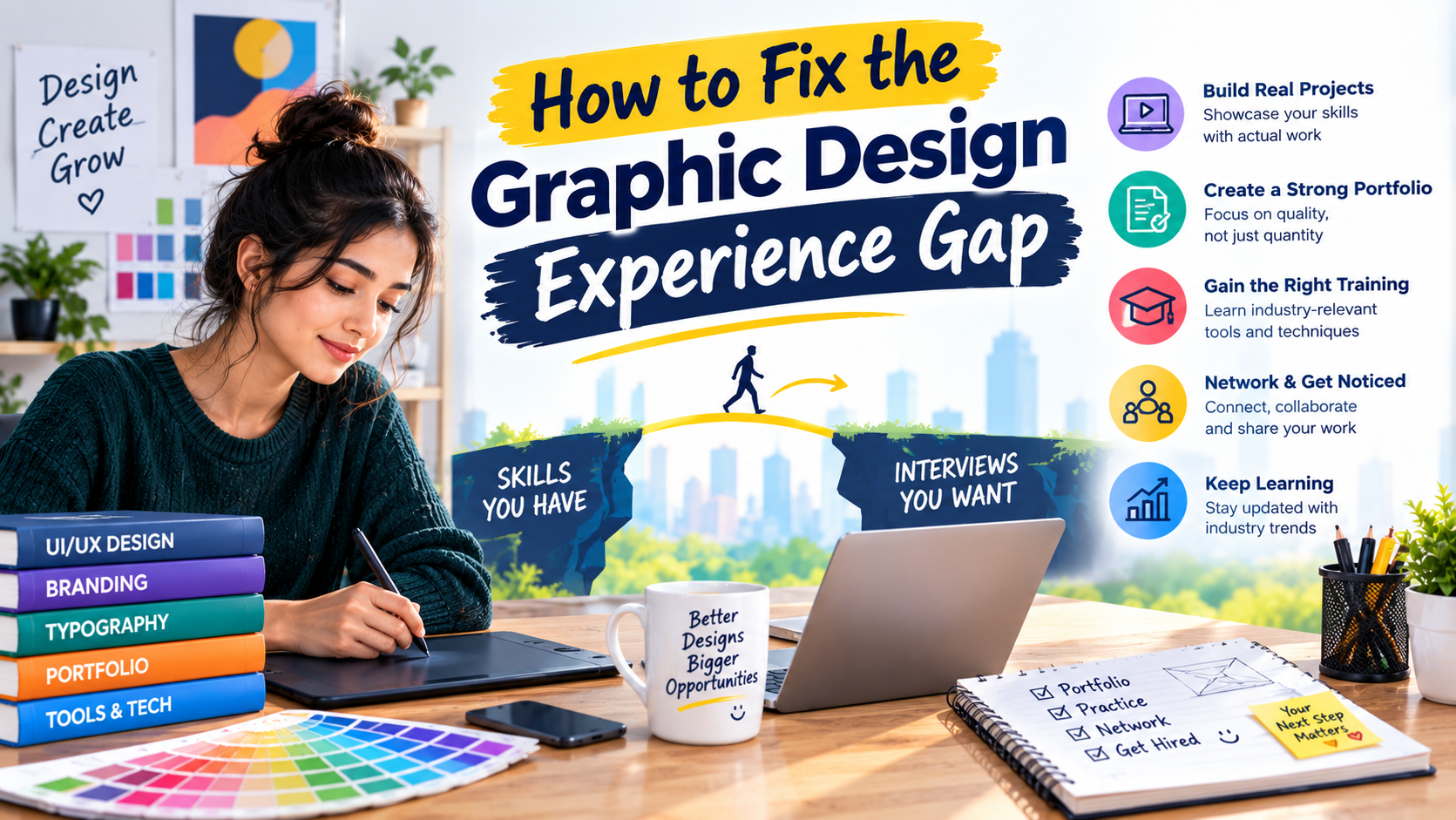
None of these causes are permanent. Here’s how to close the graphic design experience gap deliberately, rather than waiting for it to close itself.
Build Portfolio Pieces That Look Like Real Client Work
Personal and passion projects count as real experience when they’re framed properly. Rebranding a local business, redesigning a packaging concept, or building a full campaign for a fictional client all demonstrate applied skill, especially when you show the thinking behind each decision.
Get a Text-Readable Resume That Passes ATS
Pair your visual portfolio with a clean, text-based resume that an ATS can actually parse. Lead with a portfolio link, then describe your work in business terms: what you produced, how fast, and what it achieved.
Treat Personal Projects as Real Experience
Freelance gigs, volunteer design work and self-initiated projects are legitimate experience. Quantify them wherever possible, number of assets produced, deadlines met, measurable outcomes, rather than listing them as an afterthought.
Learn Industry-Standard Tools Properly
Confident, fluent use of Photoshop, InDesign and Illustrator remains the baseline employers expect. Structured, instructor-led training closes this specific part of the graphic design experience gap far faster than trial-and-error tutorials alone.
Closing the Gap with the Right Training
Structured, hands-on training is one of the fastest ways to close the graphic design experience gap, because it builds both the skills and the portfolio-ready projects employers want to see. Graphic Design Courses offers instructor-led training across the core Adobe tools employers ask for most.
Popular pathways to build real, portfolio-ready skill include:
- Photoshop Beginner Course — photo editing and image manipulation fundamentals
- Photoshop Advanced Course — professional-level digital design skills
- InDesign Beginner Course — layout design for print and publishing
- InDesign Advanced Course — brochures, catalogues and multi-page publications
- Illustrator Beginner Course — logo design and vector graphics
- Illustrator Advanced Course — advanced branding and illustration work
Each course is instructor-led and hands-on, so you leave with genuine, portfolio-ready projects, not just certificates, closing the exact gap that keeps talented designers out of the interview room.
Graphic Design Courses Available in Cities Across Australia
Training is available in person or live virtually, so wherever you’re based, you can start closing the graphic design experience gap: Adelaide, Brisbane, Canberra, Melbourne, Perth, and Sydney.
Frequently Asked Questions
What exactly is the graphic design experience gap?
The graphic design experience gap is the mismatch between a designer’s actual skill and their ability to prove it through a scannable resume, focused portfolio and clear case studies that a hiring manager can quickly evaluate.
Why don’t talented designers get interviews?
Talented designers are often screened out for structural reasons, ATS software that can’t read design-heavy resumes, thin portfolios, or job ads requiring experience that entry-level candidates can’t yet have, not because their design ability is weak.
Do personal projects count as real design experience?
Yes. Personal, freelance and self-initiated projects count as real experience when they’re framed with clear outcomes and presented as case studies, not just finished images.
What’s the fastest way to close the graphic design experience gap?
Structured, instructor-led training is usually fastest, because it builds both the technical skill and portfolio-ready projects at the same time. Graphic Design Courses are designed specifically for this.
Ready to close the graphic design experience gap and start landing interviews? Contact the Graphic Design Courses team and get matched with the right course for your goals.