



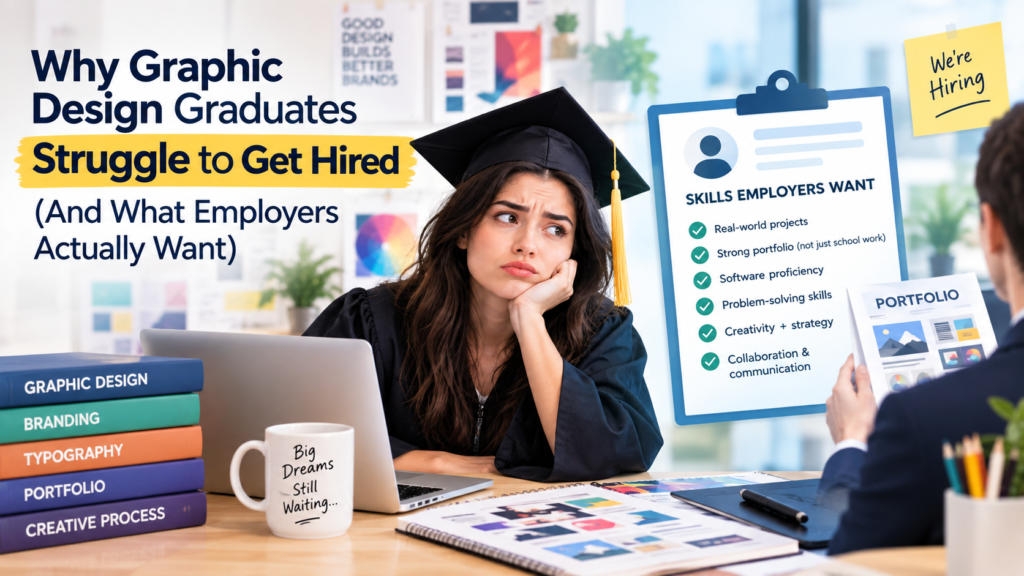
Graphic design graduates struggle to get hired at a rate that surprises most people entering the field not because Australian employers don’t need designers, but because what design education teaches and what employers actually expect have quietly drifted apart. A strong final-year portfolio full of beautifully composed, conceptual work often reads very differently to a creative director hiring for a real, deadline-driven studio role.
Studios and agencies across Sydney, Melbourne, Brisbane, Perth, Adelaide and Canberra consistently describe the same gap when explaining why graduates don’t get hired straight out of their course and it’s rarely a talent problem. This guide breaks down exactly what that gap looks like and what employers are actually evaluating for.
It’s Rarely About Design Talent
Most design graduates can genuinely design well by the time they finish their course composition, typography and colour theory are usually taught thoroughly. The struggle to get hired almost always comes from somewhere else: a portfolio built for grading rather than for a hiring manager, no understanding of real client constraints, and a resume that doesn’t translate coursework into employable skills.
The Real Reasons Graduates Struggle to Get Hired
1. Portfolios Built for Assessment, Not for Employers
Academic portfolios are often built to demonstrate conceptual range and creative exploration across many different briefs, because that’s what assessment criteria reward. Employers reviewing a portfolio are looking for something narrower and more practical: can this person produce consistent, on-brand, client-ready work, repeatedly, under a deadline? A portfolio optimised for one goal often doesn’t read well against the other.
2. No Experience With Real Client Constraints
University briefs are usually open-ended, encouraging creative freedom. Real client work comes with tight brand guidelines, budget limits, file-format requirements, and stakeholders who reject options the designer personally likes best. Graduates who’ve never practised designing within genuine constraints often struggle in their first studio role, not because they can’t design, but because they’ve never designed inside real limitations.
3. Weak Software Fluency Under Time Pressure
Coursework often allows generous timeframes to complete a single project. Agency work demands fast, confident execution in Adobe Creative Cloud or Figma under real deadline pressure, sometimes producing multiple concepts in a single day. Graduates who are technically capable but slow lose out to candidates who can execute quickly and cleanly.
4. Resumes That List Software, Not Outcomes
A resume listing “Photoshop, Illustrator, InDesign” tells a hiring manager nothing about what you actually produced with those tools. Graduates who reframe coursework and personal projects around outcomes “designed a complete brand identity system including logo, packaging and social templates for a fictional client brief” stand out immediately against generic software lists.
5. No Understanding of Print, Production or File Handoff
Many design courses focus heavily on the creative and conceptual side, with less emphasis on production-ready file preparation bleed, colour profiles (CMYK vs RGB), print-ready exports, or clean handoff files for developers. Employers, particularly in print-heavy or agency environments, notice this gap quickly during a live technical test or first real project.
6. Limited Self-Presentation and Pitching Skills
Being able to explain design decisions clearly and confidently why this typeface, why this layout, how it solves the brief is heavily weighted in interviews and client-facing roles alike. Graduates who can design well but struggle to articulate their reasoning often underperform in interviews relative to their actual design ability.
What Employers Are Actually Evaluating For
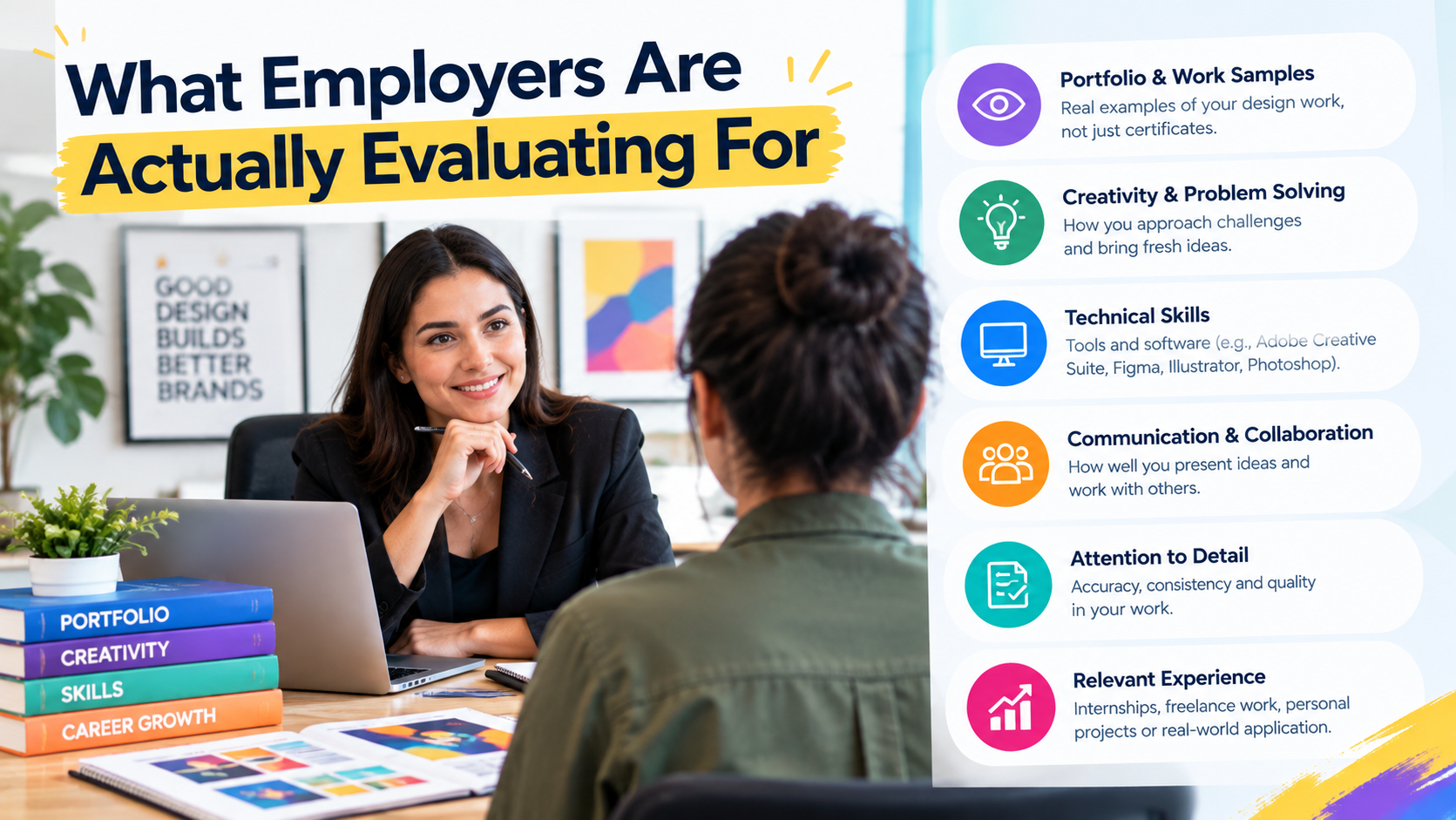
| What Graduates Often Show | What Employers Are Actually Looking For | How to Close the Gap |
| Broad, conceptual portfolio pieces | Consistent, on-brand, client-ready work | Build 2–3 projects that mimic real client constraints |
| Open-ended creative exploration | Ability to work within tight briefs and guidelines | Practise designing against a strict, invented brand guideline |
| A software skills list | Demonstrated speed and outcomes | Time yourself completing a brief and document the result |
| Polished final images only | Understanding of print/production readiness | Learn CMYK export, bleed, and file handoff basics |
| Quiet, unexplained portfolio pieces | Clear articulation of design reasoning | Practise a 60-second explanation for every portfolio piece |
Closing the Gap Before You Graduate
The gap between coursework and employability closes fastest through training built around real client-style briefs, deadlines and production constraints not just conceptual exploration. The graphic design courses at graphicdesigningcourses.au are structured around exactly this kind of brief-driven, deadline-aware practice, so graduates leave with a portfolio and skill set that reads as employable, not just creative.
For graduates specifically working on portfolio pieces without prior client experience, see our related guide: How to Build a Graphic Design Portfolio Without Real Clients.
Frequently Asked Questions
Why do talented graphic design graduates still struggle to get hired?
Usually because their portfolio, resume and interview presentation are built for academic assessment rather than for how employers actually evaluate hireability consistency, real-world constraints, speed and clear reasoning matter more than raw creative talent alone.
What do graphic design employers actually look for in a portfolio?
Evidence of working within real constraints brand guidelines, deadlines, production-ready files rather than only open-ended conceptual exploration, plus a small number of consistently strong, well-explained pieces.
How can I make my portfolio more employable before I finish my course?
Add 2–3 projects that mimic real client constraints a strict brand guideline, a tight deadline, a production-ready export and write a short explanation of your reasoning for each piece.
Final Thoughts
Graphic design graduates struggle to get hired far more often because of a presentation and constraints gap than a talent gap. Graduates who get hired fastest across Sydney, Melbourne, Brisbane, Perth, Adelaide and Canberra are consistently the ones who’ve practised designing within real constraints, can explain their decisions clearly, and present a resume built around outcomes rather than a software list.
To build a genuinely employable skill set and portfolio, Logitrain offers structured design training, and the graphicdesigningcourses.au microsite is built around closing exactly this gap before graduates start applying.